
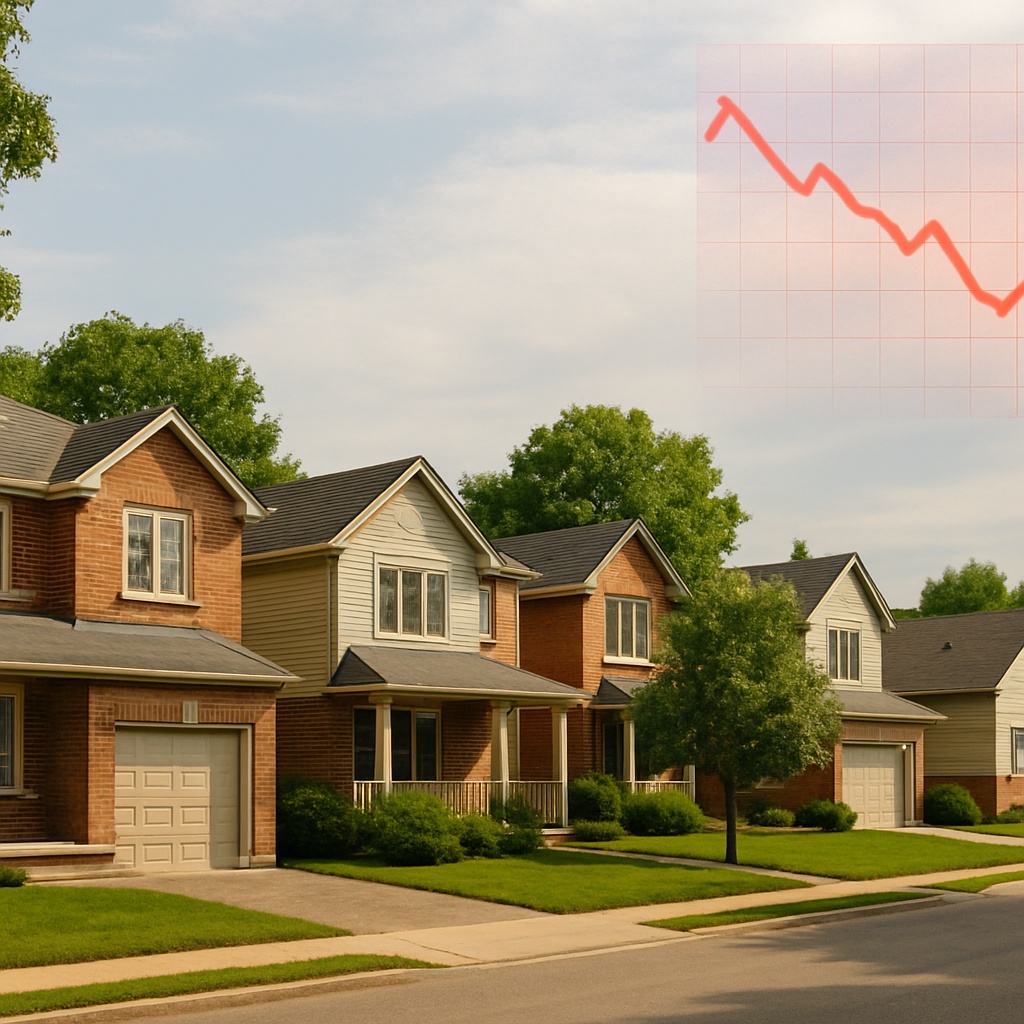
What Is a Housing Bubble, and Are We in One?
Some housing cycles feel like a wave; others feel like a rip tide. Prices climb, listings tighten, and buyers wonder whether to jump in or stand back. A “housing bubble” is the scary label people reach for when the market stops feeling connected to everyday fundamentals like income, rents, and borrowing capacity. But is that what we are living through in Canada, and especially in the GTA, today?
This guide cuts through the noise with clear definitions, data you can verify, and practical signals to watch—so you can plan your next move with confidence.
What exactly is a housing bubble?
Economists use “bubble” to describe periods when prices detach from fundamentals because people expect tomorrow’s price to be higher simply because today’s price is high. Joseph Stiglitz’s classic framing captures it neatly: if high prices are sustained only by the belief they will be higher later, you have a bubble.
In housing, analysts typically look for a cluster of red flags:
-
Price-to-income and price-to-rent ratios surge well beyond historical norms.
-
Credit grows rapidly and lending standards loosen.
-
Speculative behaviour (flipping, investor share spikes) intensifies.
-
Construction booms overshoot demographic needs.
Those signposts are grounded in decades of research on past bubbles in North America and Europe.
Canada’s current backdrop: the big moving parts
Interest rates are easing
The Bank of Canada has been cutting its policy rate through 2025, most recently to 2.25% on October 29, 2025, after several earlier reductions this year. Lower rates typically support sales and stabilize prices after a downturn.
Affordability has improved from its worst levels—though it’s still tight.
Major banks report a multi-quarter easing in ownership costs as rates fell and prices cooled in several markets, with 2025 marking the best affordability in roughly three years. A report put out by the National Bank of Canada shows multi-quarter improvements in 2025.
GTA specifics
Toronto Regional Real Estate Board reported 6,138 sales in October 2025, down 9.5% from a year earlier, alongside higher new listings and continued buyer selectivity—again, a picture of a market digesting, not overheating.
Credit conditions are guarded, not loose
Canada’s mortgage “stress test” (OSFI B-20) still requires borrowers to qualify at the higher of their contract rate + 2% or 5.25%—a structural brake on speculative excess. Regulators have also tightened oversight of highly indebted lending buckets. Mortgage debt growth has been slower than historical norms in 2025.
Debt loads remain high but not accelerating dangerously
Household credit-market debt sits around 170–175% of disposable income in 2025, with the debt-service ratio (share of income spent on interest and principal) hovering near 14%–15%—elevated historically, but not spiking.
Are Toronto and the GTA in a bubble?
Short answer: current evidence points to “overvalued risks,” not a full-blown bubble ready to burst. Here’s why:
-
Risk indices have cooled from “bubble risk.” UBS’s 2025 Global Real Estate Bubble Index places Toronto (and Vancouver) in the “moderate risk” group—down from the bubble-risk zone in earlier editions. That matches what we’re seeing: elevated valuations without the speculative mania or runaway credit growth that precede classic busts.
-
Valuation benchmarks remain stretched. The OECD still shows price-to-income and price-to-rent ratios in Canada well above long-run norms. That’s a vulnerability if the economy weakens. But stretched valuations alone don’t make a bubble; it’s the combination of stretched valuations plus aggressive credit growth and speculative froth that turns risk into rupture.
-
Market behaviour looks two-sided, not euphoric. Sales are choppy, buyers are negotiating, and months of inventory have risen compared to the peak frenzy years.
-
Policy guardrails matter. The stress test, supervisory caps on highly leveraged lending, and vigilant bank underwriting keep speculative leverage in check—very different from the pre-2008 U.S. playbook.
Bottom line for the GTA: Prices are high and sensitive to economic shocks, but the data look more like a slow-healing, rate-sensitive market with structural supply constraints, not a classic bubble about to pop.
Signals to watch (so you can separate risk from headline noise)
-
Credit growth and underwriting: A sharp acceleration in mortgage growth or any loosening of standards would raise bubble risk. For now, growth is slower than normal and standards are firm.
-
Affordability trend: Continued improvements from banks’ affordability trackers are supportive; a reversal as rates plateau would cap demand.
-
Price momentum vs. incomes/rents: If prices re-accelerate much faster than rents and wages, the gap widens again—watch OECD ratios and local rent benchmarks.
-
Policy rate path: Further Bank of Canada cuts would support activity; a surprise pause or hike would cool it.
-
Local inventory and new listings: TRREB monthly releases are your best temperature check for the GTA. Rising inventory without matching demand = price pressure; balanced flows = stability.
So…are we in a housing bubble?
Given today’s data: No, not in the classic sense. Canada—and the GTA—are still expensive, but the tell-tale bubble traits (surging credit, speculative blow-off, collapsing underwriting) are not present. Instead, we are in an interest-rate-sensitive, supply-constrained market that can wobble with macro headlines, then stabilize as rates ease and pent-up demand returns. Keep watching valuations, credit, and inventory—those will telegraph any shift from “overvalued” to “bubble.”
Ready to move with confidence? Talk to The Johnson Team. Whether you are buying your first condo, right-sizing in Etobicoke, or preparing a family home for sale anywhere in the GTA, The Johnson Team pairs unparalleled market knowledge, creative marketing, and hard-nosed negotiation to help you win in any cycle.
If you are buying, we will narrow the search, line up the best options, and negotiate favourable terms at no cost to you as a buyer. If you are selling, we will price precisely, showcase your home beautifully, and handle every step to maximize your result. Contact The Johnson Team today to map your plan, and move with clarity, confidence, and a proven partner by your side.
Posted by Maryann Quenet on
Enjoy this blog post? Click here to subscribe for updates
Leave A Comment