
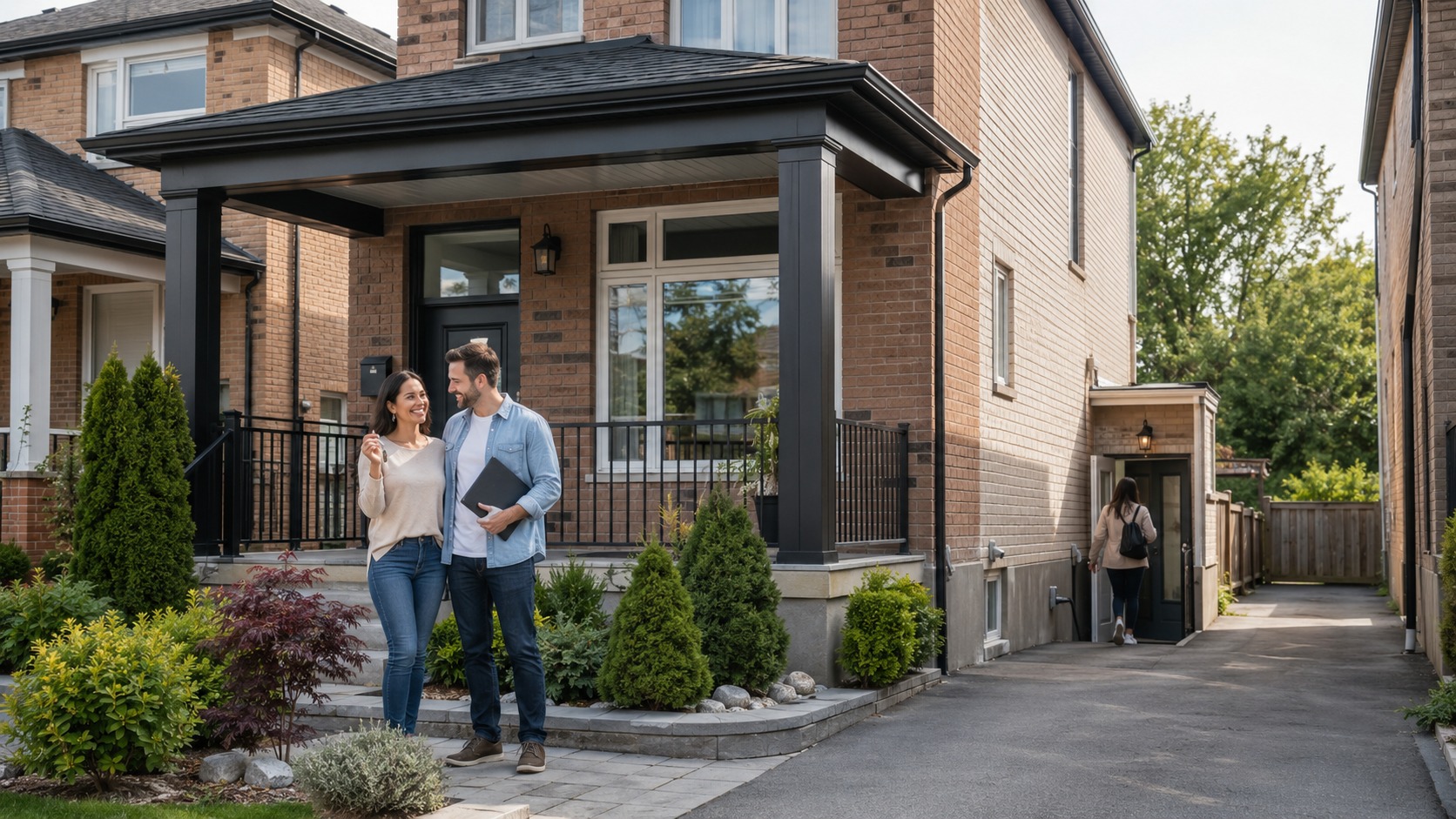
Pros & Cons of Owner-Occupied Investment Properties
Buying a home in the Greater Toronto Area is not easy. Prices are high, mortgage payments are heavy, and many buyers are trying to find a way into the market without putting themselves under too much pressure.
That is why more buyers are looking at owner-occupied investment properties.
This usually means buying a property, living in one part of it, and renting out another part. In the GTA, that could be a detached home with a legal basement apartment, a duplex, a triplex, a small multiplex, a laneway suite, or a garden suite.
For the right buyer, this can be a smart way to reduce monthly costs, build equity, and create future investment options. But it is not a simple shortcut. You are not just buying a home. You are also becoming a landlord.
Before you buy, you need to understand the upside, the risks, and the GTA-specific details that can make or break the purchase.
What Is an Owner-Occupied Investment Property?
An owner-occupied investment property is a property where the owner lives in one unit and rents out another unit, or multiple units, to tenants.
In Toronto and the GTA, this often includes homes with basement apartments, duplexes, triplexes, fourplexes, laneway suites, garden suites, or homes with more than one self-contained living space.
The key detail is that the owner lives in the property as their principal residence. That can affect financing, mortgage qualification, insurance, tax planning, and long-term resale value.
A secondary suite is not just “extra space.” The City of Toronto defines it as a self-contained living space with its own food preparation and bathroom facilities, located within and secondary to the main dwelling unit.
Why GTA Buyers Are Paying More Attention to Income Potential
In many Toronto neighbourhoods, buyers are no longer looking only at bedrooms, finishes, and school districts. They are also asking, “Can this property help carry itself?”
That question matters.
A home with a legal basement apartment in Etobicoke, East York, Scarborough, Mississauga, or North York may be more attractive than a similar home without income potential. Buyers see the rent as a way to soften the cost of ownership.
This is especially true for first-time buyers and move-up buyers who want more space but do not want every dollar tied up in the mortgage.
Toronto’s zoning changes have also made this conversation more important. In May 2023, Toronto City Council adopted changes to allow multiplexes with up to four units in neighbourhoods city-wide. That does not mean every property is automatically easy to convert, but it does mean buyers are thinking more seriously about long-term rental and conversion potential.
Pro: Rental Income Can Help Offset High Monthly Costs
The biggest advantage is simple: rent can help pay the bills.
In the GTA, monthly carrying costs can include your mortgage, property taxes, utilities, home insurance, maintenance, repairs, and possible upgrades. Rental income from a basement apartment, second unit, or additional suite can make those costs more manageable.
This can be especially helpful when interest rates are higher or when buyers are stretching to get into a better neighbourhood.
But the key is to use realistic numbers. Do not build your plan around the highest rent you saw online. A strong purchase analysis should consider conservative rent, vacancy periods, maintenance, utilities, and possible repairs between tenants.
A property that only works on perfect numbers is not a strong investment. It is a risk.
Pro: Financing May Be More Flexible Than a Pure Investment Property
One reason owner-occupied income properties are attractive is that financing can be more favourable than buying a pure rental property.
CMHC allows different rental-income approaches for mortgage loan insurance qualification, including methods that may consider rental income for owner-occupied properties with two to four units.
This matters because a traditional non-owner-occupied investment property often requires a larger down payment. With an owner-occupied property, a buyer may have more options, depending on the purchase price, number of units, lender, insurer, and property details.
That said, not every lender treats rental income the same way. Some may only use a portion of projected rent. Some may want leases. Some may require an appraisal with market rent. Some may be cautious if the unit is not legal or properly documented.
This is why buyers should speak with a mortgage professional before falling in love with a property.
Pro: You Can Build Equity While Tenants Help Pay Down the Mortgage
Owner-occupied investment properties can help buyers build wealth over time.
If tenants are helping cover the mortgage, part of that rental income may effectively help pay down the loan. At the same time, the property may increase in value over the long term.
In the GTA, this has been one of the main reasons duplexes, triplexes, and homes with legal secondary suites have remained attractive. They are not just places to live. They can also become stepping stones toward future investments.
For example, a buyer may live in the main floor unit for several years, rent the basement, build equity, and later move into another home while keeping the first property as a full rental.
That path is not guaranteed, but it is one reason these properties can be powerful when purchased carefully.
Pro: Multi-Unit Properties Offer Long-Term Flexibility
A property with more than one living space can adapt as your life changes.
A basement apartment could be rented today, used by aging parents later, or become private space for an adult child in the future. A laneway suite or garden suite may create rental income now but also provide flexible housing options down the road.
Toronto allows garden suites in rear yards of residential properties that are not next to a public laneway, provided the property meets the rules. The City also notes that only one unit is permitted in a garden suite.
That kind of flexibility matters in the GTA, where housing needs can change quickly and moving costs can be high.
Con: Living Beside Your Tenants Is Not for Everyone
The biggest lifestyle drawback is proximity.
When you live in the same property as your tenants, you may hear them, see them, and deal with issues more directly. Shared driveways, laundry, backyards, garbage bins, noise, pets, and parking can all become personal very quickly.
Some owners are comfortable with this. Others hate it.
Before buying, be honest with yourself. Are you comfortable enforcing lease terms? Are you okay receiving repair requests on a weekend? Can you handle a difficult conversation about noise or unpaid rent?
If the answer is no, this strategy may not fit your personality, even if the numbers look good.
Con: Not Every Basement Apartment Is Legal, Safe, or Insurable
This is one of the biggest mistakes GTA buyers make.
A listing may say “basement apartment,” “in-law suite,” “income potential,” or “separate entrance,” but that does not automatically mean the unit is legal.
A legal secondary suite usually needs to meet zoning, building code, fire safety, electrical, and property standards requirements. It may need proper permits, fire separation, safe exits, ceiling height compliance, smoke and carbon monoxide alarms, and proper ventilation.
Toronto’s secondary suite rules require careful review before applying for permits or relying on the unit as legal rental space. (City of Toronto)
This matters because an illegal or unsafe unit can create problems with financing, insurance, resale value, municipal enforcement, and tenant safety.
A buyer should never assume a unit is legal just because it is already rented.
What Buyers Should Check Before Purchasing an Owner-Occupied Income Property
This is where good due diligence makes a real difference.
Before buying, ask direct questions about the property’s rental setup. Is the unit legal? Were permits obtained? Are there separate hydro meters? How are utilities split? Is there fire separation between units? Are there proper exits? Is the ceiling height compliant? Is electrical work permitted? Does the insurance company know the property has a rental unit?
You should also ask whether the tenant is on a lease, what rent they pay, whether rent is below market, and whether the tenant will remain after closing.
This is especially important in Ontario because you cannot simply remove a tenant because you bought the property. Existing tenancies usually continue after the sale unless proper legal steps are taken.
A low-rent tenant in place can seriously affect your cash flow. A vacant legal unit may offer more flexibility. A rented illegal unit may create serious risk.
Con: Ontario Landlord Rules Can Be Complicated
Ontario has strong tenant protections. That is not a bad thing, but it does mean landlords need to understand the rules.
Rent increases, notices, maintenance obligations, entry rules, deposits, evictions, and tenant rights are all regulated.
This is where some new landlords get into trouble. They treat the rental unit casually because it is inside their own home. But if it is a rental unit covered by Ontario’s landlord-tenant rules, you need to follow the proper process.
Before buying, speak with a real estate lawyer if the property has tenants, especially if your plan depends on vacant possession, renovation, or changing the use of a unit.
Con: Maintenance Costs Are Often Higher Than Buyers Expect
More units usually mean more things that can break.
A home with a rental unit may have extra appliances, more plumbing fixtures, more electrical demand, more wear and tear, and more frequent repairs.
Older GTA homes can also come with bigger capital costs. Waterproofing, sewer lines, roofs, windows, HVAC systems, knob-and-tube wiring, old panels, and basement moisture issues can all affect the true cost of ownership.
This is why the cheapest property is not always the best investment property.
A well-renovated, legal, properly separated basement apartment may be worth paying more for than a cheaper home with an unpermitted basement setup that needs major work.
Con: Vacancy Risk Can Hurt Your Budget
Toronto has strong rental demand, but rental income is never guaranteed.
Tenants can leave. A unit can sit vacant. Repairs can delay a new lease. Rent may be lower than expected. A property may need upgrades before it can be rented safely or legally.
If you need the rental income to afford the property, build a cushion.
A good rule is to ask yourself: “Could I carry this property for a few months if the rental unit were vacant?”
If the answer is no, the purchase may be too tight.
What Makes a Strong Owner-Occupied Investment Property in the GTA?
A strong property is not just one with a separate entrance.
A better property usually has a legal or clearly permit-ready rental unit, a practical layout, good ceiling height, strong fire separation potential, separate laundry or easy laundry access, sensible utility arrangements, parking that works, and a location with steady rental demand.
Transit access matters. So do schools, walkability, employment hubs, and commute times.
In Etobicoke, for example, a home near transit, parks, schools, and major routes may appeal to both homeowners and tenants. In East York or Scarborough, proximity to subway stations, GO Transit, colleges, hospitals, and shopping can make a rental unit more marketable.
The best income properties work for both the owner and the tenant.
When an Owner-Occupied Investment Property May Not Be the Right Fit
This strategy is not for everyone.
It may not be the right move if you value total privacy, dislike landlord responsibilities, have no emergency repair fund, need the rental income to make every payment, or are buying a property with questionable legal status.
It may also be a poor fit if the home requires major renovations before rental income can begin.
The goal is not simply to buy anything with “income potential.” The goal is to buy a property where the income potential is realistic, legal, safe, and aligned with your lifestyle.
Final Thought: Owner-Occupied Investment Properties Can Work, but Only With the Right Strategy
Owner-occupied investment properties can be a smart way to buy real estate in the GTA, especially for buyers who want rental income to help offset ownership costs.
They can help you enter the market, build equity, create flexibility, and start thinking long term.
But they are not automatic wins. The details matter. A legal basement apartment is very different from an unpermitted basement setup. A duplex with strong rents is very different from a property with below-market tenants. A garden suite opportunity is very different from a property that only looks good on paper.
Before buying, you need to understand the property, the numbers, the rules, and your own comfort level as a landlord.
If you are thinking about buying an owner-occupied investment property, selling a home, or exploring what your GTA property may be worth, The Johnson Team can help you make the next move with confidence. Led by Jeff and Liz Johnson, The Johnson Team is known across Toronto and the GTA for strong market knowledge, creative marketing, skilled negotiation, and client-first service.
Whether you are looking to buy, sell, or understand your options, contact The Johnson Team today to get connected with an experienced local agent who can guide you through the process from start to finish.
Posted by Maryann Quenet on
Enjoy this blog post? Click here to subscribe for updates
Leave A Comment