
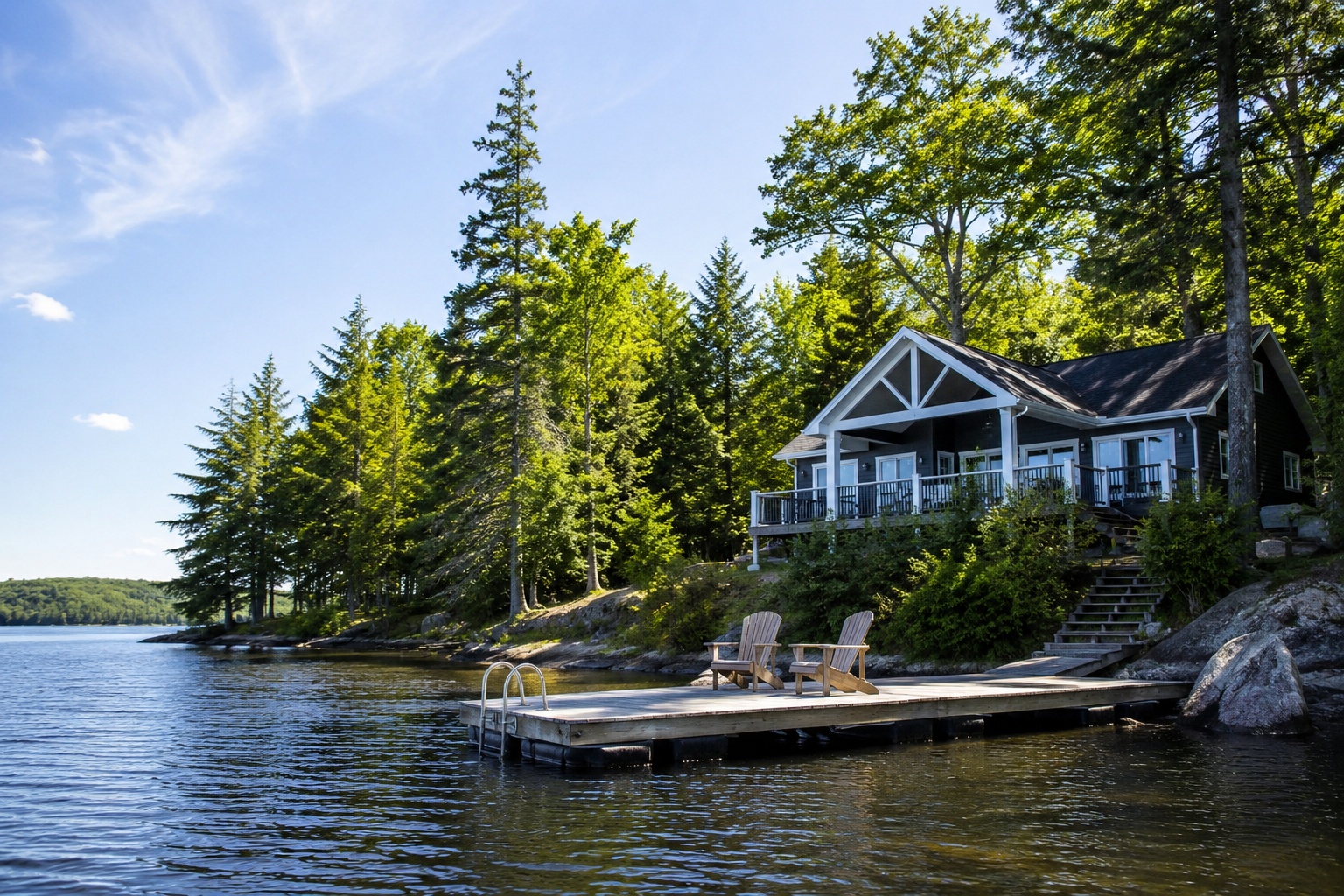
Looking to Buy a Cottage in Ontario? Here’s What You Need to Know
Buying a cottage can feel like a dream. You may be picturing quiet mornings by the lake, summer weekends with family, and a place where you can slow down and get away from the city.
But buying a cottage in Ontario is not the same as buying a regular house or condo. With a cottage, you are not only buying the building. You are also buying the land, the road access, the water source, the septic system, the shoreline, and all the local rules that come with the property.
Those details can affect your mortgage, insurance, renovation plans, rental options, monthly costs, and resale value. A cottage can be a great purchase, but it needs a different level of research before you make an offer.
Decide How You Plan to Use the Cottage Before You Start Looking
Before you start scrolling through listings, be honest about how you want to use the cottage.
A summer-only weekend cottage is very different from a year-round property. A private family getaway is different from a cottage you plan to rent out. A future retirement home is different from a place you only visit a few weekends each year.
If you want to use the cottage in the winter, you need to think about insulation, heating, snow removal, road access, and whether the water system can handle freezing temperatures. If you want to work remotely, internet quality matters. If you plan to rent it out when you are not there, local short-term rental rules need to be checked before you buy.
The biggest mistake is buying based only on how the cottage feels in the summer. A property can look perfect in July, then become expensive or frustrating in January if it does not match how you actually want to use it.
Get Pre-Approved for the Right Type of Cottage Mortgage
A mortgage pre-approval for a regular home does not always mean every cottage will qualify. Lenders often look closely at the property itself, especially when it comes to access, condition, water, septic, and whether the cottage can be used year-round.
The CMHC Second Home program can apply to eligible second-home purchases, but the property must be in Canada, suitable and available for full-time, year-round occupancy, and have year-round access. That matters because many cottages are seasonal, located on private roads, or built in a way that can make financing more complicated.
Before you fall in love with a property, speak with a lender or mortgage broker who understands recreational properties. Ask what down payment may be needed, whether the cottage needs to be winterized, and whether the lender has rules around private roads, island access, lake water, wells, septic systems, or older buildings.
A cottage may look affordable online, but if the financing does not work, the deal may not be realistic.
Budget for More Than the Purchase Price
The purchase price is only one part of the cost. Cottage buyers also need to budget for land transfer tax, legal fees, title insurance, inspections, appraisal fees, insurance, utility setup, repairs, and ongoing maintenance.
In Ontario, land transfer tax generally applies when you buy property. First-time homebuyers may qualify for an Ontario land transfer tax refund, but there are rules. One key rule is that the buyer must occupy the home as their principal residence within nine months of the transfer, according to Ontario’s first-time homebuyer refund rules.
This is important if you are an aspiring homeowner thinking about buying a cottage as your first property. If the cottage will truly be your main home, some first-time buyer rules may be relevant. If it will only be used as a vacation property, you need to confirm what you do and do not qualify for before you build your budget.
You should also keep extra money aside for repairs. Cottage repairs can cost more than expected because trades may need to travel farther, supplies may not be nearby, and rural or waterfront work can be more complicated than city repairs.
Check the Road Access Before Making a Firm Offer
Road access is one of the most important parts of buying a cottage. A property on a year-round municipal road is usually simpler to finance, insure, visit, and maintain. A property on a private road, seasonal road, or island can be more complicated.
Ask who owns the road, who maintains it, who plows it, and whether there is a written road maintenance agreement. Also ask whether emergency vehicles can reach the property in every season.
This may not sound exciting, but it matters. A cottage that is difficult to access can be harder to use, harder to insure, harder to finance, and harder to resell. A lower purchase price may not be worth it if you cannot easily get to the property when you want to use it.
Test the Water and Understand the Water Source
Many Ontario cottages are not connected to municipal water. They may use a drilled well, dug well, lake intake, cistern, or another private water source. That means you need to know where the water comes from, how it is treated, and whether it is safe.
Public Health Ontario provides testing for E. coli and total coliforms in private drinking water systems. Ontario also provides guidance on testing and treating private water wells, including the point that Public Health Ontario’s private well water testing does not test for every possible contaminant, such as chemicals.
A water test is important, but it does not tell you everything about the water system. It may show whether bacteria are present at the time of testing, but it does not fully explain the age, condition, flow rate, reliability, or location of the well.
Before buying, ask for recent water test results, well records, treatment system details, and any history of shortages, smell, staining, low pressure, or boil-water concerns. If the cottage uses lake water, ask how it is filtered, treated, and winterized.
Do Not Skip the Septic Inspection
Many cottages use a private septic system instead of municipal sewer service. This is one of the biggest items to check before buying.
A septic problem can be expensive, unpleasant, and difficult to fix, especially near water. Ontario’s guidance on wells on your property reminds property owners to keep septic systems working and pumped regularly to help prevent contamination of well water.
A septic inspection can help you understand the system’s age, size, condition, and location. It can also help confirm whether the system appears suitable for the cottage. This is especially important if the cottage has been expanded, if extra bedrooms were added, or if the property has been used by large groups.
Do not rely only on the seller saying the system has always worked. Make septic review part of your due diligence.
Understand Shoreline and Waterfront Rules
Waterfront is one of the biggest reasons people buy cottages, but it also comes with extra rules. You should not assume you can change the shoreline, add structures, remove vegetation, build erosion control, or expand near the water without approvals.
Ontario’s guidance on Crown land and shore land work permits explains that certain work on shore lands may require a permit. This can include work related to erosion control structures, dredging, aquatic vegetation, and other shoreline changes.
Ontario also explains that maintaining, repairing, or replacing erosion control structures on shore lands does not give the property owner any right, title, or interest in Crown land through its page on erosion control structures on shore lands.
This matters if you want to add a dock, repair a breakwall, rebuild stairs, change the shoreline, dredge, remove aquatic vegetation, or improve erosion control. Before you assume the work is allowed, check with the municipality, the province, and any local conservation authority that may be involved.
Check Flood, Erosion, and Conservation Authority Risk
A cottage can be beautiful and still come with flood or erosion risk. Waterfront properties may be affected by high water, poor drainage, ice damage, slope issues, wetlands, or regulated shoreline areas.
Ontario’s flood hazard identification and mapping guidance explains that flood mapping helps municipalities, conservation authorities, and other groups use the best available data when preparing or updating floodplain mapping.
Ontario also explains that permits under the Conservation Authorities Act may be required for development or certain activities in regulated natural hazard areas. These can include wetlands, river or stream valleys, hazardous lands, and areas near shorelines.
Before buying, ask whether the property is in a regulated area, floodplain, erosion hazard area, wetland area, or protected zone. Look carefully at the grading, shoreline, basement, crawlspace, retaining walls, and any signs of water damage.
Get Insurance Quotes Before Waiving Conditions
Insurance should not be left until the last minute. Cottage insurance can be more complicated than regular home insurance, especially if the property is seasonal, remote, vacant for long periods, heated by a wood stove, close to water, on a private road, or used as a rental.
The Financial Consumer Agency of Canada explains that overland flood insurance may also be called inland flood insurance or enhanced water damage coverage. This is important because water damage coverage can vary, and buyers should not assume every type of flooding is automatically covered.
Before your offer becomes firm, contact insurance providers and explain the property clearly. Tell them how the cottage is accessed, how it is heated, how often it will be used, whether it will be rented, and what water and septic systems it has.
If the property is difficult or expensive to insure, you want to know that before you are locked into the purchase.
Do Not Assume You Can Use the Cottage as a Short-Term Rental
Some buyers want to rent out their cottage when they are not using it. This may help with carrying costs, but it is not always simple.
Short-term rental rules are local, and they can change from one municipality to another. In the City of Kawartha Lakes, owners who rent out a cottage, home, or vacation property for stays of less than 28 days in a row need a Short-Term Rental Accommodation Business Licence.
In the Township of Muskoka Lakes, a Short Term Rental Accommodation generally means temporary accommodation for 28 consecutive calendar days or less, and the township has a licensing program for these rentals.
Before buying, check local rules for short-term rentals, zoning, licensing, fire safety, septic capacity, parking, occupancy limits, and insurance. A cottage that looks profitable as a rental online may not work if the municipality limits or regulates that use.
Review Zoning, Permits, and Future Renovation Plans
If you want to renovate, rebuild, add a bunkie, build a garage, expand the cottage, or turn the property into a full-time home, check the rules before you buy.
Ontario’s citizen’s guide to zoning bylaws explains that zoning bylaws control how land may be used and where buildings and other structures can be located. Ontario’s guide to building permits also explains that municipal staff review permit applications to confirm that proposed work complies with the Building Code and other applicable laws, including local zoning bylaws.
This is especially important with older cottages. Some decks, docks, bedrooms, additions, or outbuildings may have been added years ago without clear records. That does not always mean you should walk away, but it does mean you need to understand the risk.
Before buying, ask about permits, surveys, setbacks, lot coverage, shoreline restrictions, easements, and whether the property’s current use is legal.
Think About Resale Before You Buy
Even if you plan to keep the cottage for many years, you should think about resale from the start.
The features that make a cottage easier to sell are often the same features that make it easier to own. Good road access, safe drinking water, a reliable septic system, strong internet, usable waterfront, clear title, reasonable taxes, and a practical layout all matter.
A cottage with too many issues may be cheaper upfront, but harder to finance, insure, maintain, rent, or sell later. That does not mean every cottage needs to be perfect. It means the price should reflect the risks, and you should know what you are taking on before you make an offer.
You should also understand the tax side. The Canada Revenue Agency includes a cottage in its guidance on principal residences and other real estate, and says that for 2016 and later tax years, the principal residence exemption will only be allowed if the sale and designation are reported on your tax return.
If the cottage will be a second property, rental property, future retirement home, or family-owned asset, speak with an accountant before you buy. Tax planning is much easier before the purchase than years later when you decide to sell or transfer ownership.
Include the Right Conditions in Your Cottage Offer
A good cottage offer protects you without making the deal harder than it needs to be. The right conditions depend on the property, but cottage buyers often need to think about financing, insurance, home inspection, septic inspection, water testing, well inspection, lawyer review, zoning review, permit review, and road access review.
You may also need to review surveys, easements, shoreline rules, conservation authority information, rental bylaws, road maintenance agreements, and records for major systems.
The goal is not to overcomplicate the purchase. The goal is to avoid expensive surprises. A good buyer’s agent can help you understand which conditions are reasonable and how to make your offer competitive without taking on unnecessary risk.
Questions to Ask Before Buying a Cottage in Ontario
Before making an offer, ask how the cottage is accessed in every season, whether the road is public or private, how the water is supplied, when the septic system was last inspected or pumped, whether the property can be insured, and whether the lender will finance it.
You should also ask whether the shoreline has any restrictions, whether the property is in a conservation authority regulated area, whether there are permits for past additions, whether short-term rentals are allowed, and what major repairs may be coming up.
These questions are not meant to scare you. They are meant to help you buy with confidence. The more you know before making an offer, the fewer surprises you are likely to face after closing.
Final Thoughts: Buy the Cottage With Confidence
Buying a cottage in Ontario can be a smart and rewarding move, but it should be done carefully. The right cottage can give you space, freedom, family memories, and long-term value. The wrong one can become expensive, stressful, and harder to use than you expected.
Before you buy, make sure you understand the financing, road access, water source, septic system, shoreline rules, flood risk, insurance, zoning, taxes, rental options, and resale outlook. A cottage is not just a place to relax. It is a property with systems, rules, responsibilities, and long-term costs.
If you are looking to buy a cottage or recreational property in Ontario, The Johnson Team can help you take the next step with confidence. Our buyer’s agents can help you understand your budget, compare properties, review local market conditions, and negotiate favourable terms with your best interests in mind. Don’t hesitate to contact us to start working with a buyer’s agent right away.
Posted by Maryann Quenet on
Enjoy this blog post? Click here to subscribe for updates
Leave A Comment